

In drilling operations, top hammer bits are core components. Their failure can lead to construction interruptions, increased costs, and safety risks such as stuck drill bits and borehole collapse. This article analyzes common failure modes, causes, and coping strategies, noting that failures often manifest as "progressive damage" or "sudden failure".
1. Failure Mode
1.1 Excessive wear: The most common failure mode, characterized by dulling of the alloy cutting tip, wear of edges and corners, and surface peeling, resulting in a decrease in drilling speed and inability to effectively break up rock and soil layers.
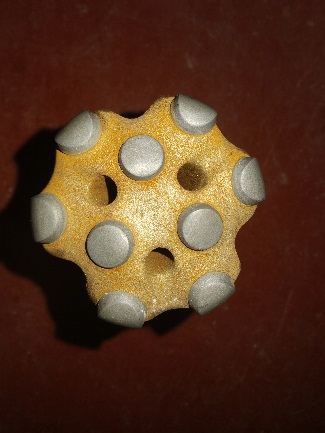
1.2 Alloy detachment: The connection between the alloy and the matrix breaks, and the alloy falls into the hole, which can easily cause drill jamming or drill burial accidents. The failure section often shows the characteristics of fracture or tearing of the matrix material.
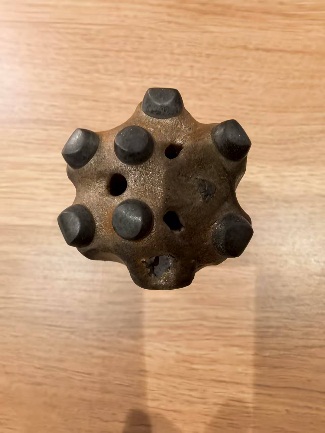
1.3 Matrix cracking: Radial or axial cracks appear in the alloy steel matrix, mostly at the root of the thread. After being subjected to external impact or fatigue stress, they are prone to propagate to overall fracture.
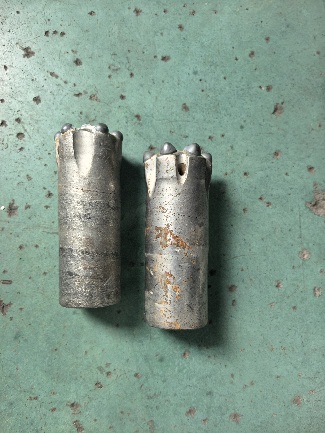
2. Main causes of failure: inherent defects and acquired operational issues
Failure is a concentrated manifestation of problems in multiple stages. On the product side, some companies use low-strength alloys and inferior base steel to reduce costs, resulting in poor material compatibility; unreasonable spiral groove and thread profile designs lead to poor slag removal and insufficient connection strength; and low thread machining accuracy creates potential failure hazards.
In field applications, insufficient geological surveys can lead to a mismatch between drill bits and rock types . For example, hard rock drill bits are prone to wear when used in soft soil formations, while soft rock drill bits are prone to breakage when used in hard rock formations. Improper drilling pressure, rotation speed, and slag removal parameters accelerate wear and tear. Inadequate post-use cleaning, maintenance, and storage can also shorten the lifespan of the drill bit. Furthermore, complex geological conditions and problems with auxiliary systems also exacerbate the risk of failure.
3. Two-way response strategy
Production and application require collaborative efforts. In the manufacturing process, companies should optimize material selection, matching alloy cutter heads with base steel according to geological conditions; improve spiral groove design and alloy arrangement to enhance slag removal efficiency and stress uniformity; and use high-precision processes and establish a comprehensive testing system.
At the construction and application level, geological exploration will be strengthened to accurately select drill bits; construction parameters will be scientifically set, and real-time monitoring will be used to avoid overload; usage logs will be established, and maintenance procedures will be standardized. Simultaneously, both parties will establish a failure feedback mechanism to recover drill bits for analysis and iterate on the product.