

During rock drilling, drill rods are subjected to complex alternating stresses caused by impact, torsion, bending and other loads. The surface of the rod body suffers severe abrasion from rocks, while the central bore undergoes impact and corrosion by mine water, leading to complex failure behaviors. As a consumable for rock drilling, the quality of R32 drill rods has a substantial impact on mine production costs. Hence, stabilizing and improving the manufacturing quality of drill rods is of great importance.
I. Main Failure Modes of R32 Drill Rod
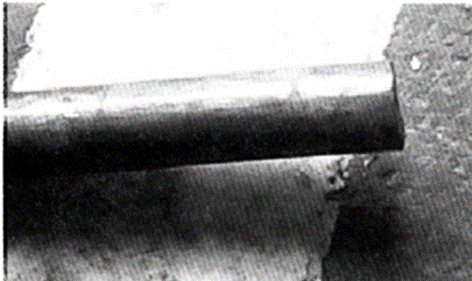
The primary failure modes of R32 drill rods fall into three categories: thread wear failure (see Figure 1), fracture failure at the transition zone between threads and rod body (see Figure 2), and rod body failure (see Figure 3, a less common case).


II. Quality Problem Analysis of R32 Drill Rod
1. Material defects of hollow steel used for R32 drill rods.
2. Defects including poor straightness and low dimensional accuracy of the rod body.
3. Unreasonable structural design of drill rod end faces and non‑standard processing, resulting in poor fitting between adjacent drill rod end faces.
4. Deficiencies in the design or processing of transition zones, which lead to low precision of threads, thread roots and transition zones, surface scratches, and high stress concentration in transition zones.
5. Poor transition fit between wave‑shaped threads and transition arcs, leading to stress concentration.
6. After heat treatment, the microstructure and hardness of the drill rod’s surface layer and core fail to meet specifications, resulting in inferior comprehensive mechanical properties.
7. Restricted by equipment limitations, surface treatments such as shot blasting and anti‑corrosion treatment cannot be implemented, which compromises the overall mechanical performance of drill rods.
III. Measures to Improve the Quality of R32 Drill Rods
1. Rod Body Structure
The structural form of end faces and transition grooves is a vital factor influencing the quality and service life of drill rods. Strictly designing and machining end faces and transition grooves in compliance with standards is an effective way to prevent premature fracture of R32 drill rods.
2. Machining Process
Controlling rod body straightness and standardizing the machining of thread end face structures as well as internal and external end‑face chamfers are primary measures to guarantee drill rod service life.The depth of transition grooves and the radius of curvature at groove bottoms exert the greatest impact on the stress concentration factor and must be strictly regulated. Besides, the fullness of wave‑shaped threads is also a major determinant of service life; wave‑shaped threads with insufficient fullness have small volume and wear quickly.
3. Heat Treatment Process
The common heat treatment process for R32 drill rods is carburizing + air cooling + tempering. As a chemical heat treatment technique, carburizing enables specific elements in the atmosphere to infiltrate the steel surface through heating and thermal insulation, modifying the chemical composition of the surface layer and creating distinct microstructures and mechanical properties between the core and surface layer. During carburization, higher temperature, carbon potential and carburizing speed accelerate the carburizing process, while lower parameters slow it down. Excessively high carbon content in the carburized layer produces network carbides, increasing brittleness and notch sensitivity. After quenching, coarse martensite and excessive austenite form; surface austenite in the carburized layer impairs the surface hardness and wear resistance of drill rods. Accordingly, the proper selection of carburizing and heat treatment parameters is the most critical factor affecting drill rod quality.
4. Shot Blasting and Anti‑Corrosion Treatment
Shot blasting and anti‑corrosion treatment are among the key measures to improve rock hammer drill rod quality, as they significantly extend fatigue life and are indispensable procedures. At present, few domestic manufacturers conduct surface treatment for drill rods, which is a major reason for the substantial quality gap between domestic and foreign drill rods.
IV. Conclusion
XTC rock drilling tools enforce strict control over key production links including machining, heat treatment and surface treatment to ensure manufacturing quality. Our goal is to provide customers with highly wear‑resistant, impact‑resistant and long‑service‑life rock drilling tools, contributing to the efficient development of the global mining industry.